




Institutional Audit
Evaluating Institutional Readiness for Internationalization
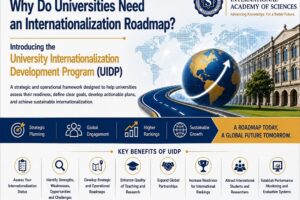
Institutional Audit is the first and most fundamental stage of the University Internationalization Development Program (UIDP). It provides a comprehensive assessment of a university’s institutional capacity, governance structure, policies, strategic direction, and organizational readiness for internationalization.
Internationalization is not limited to student mobility or international partnerships. It requires a strong institutional foundation that aligns leadership, governance, administrative systems, financial resources, and quality assurance mechanisms with international standards. The Institutional Audit examines these dimensions systematically to identify strengths, weaknesses, opportunities, and areas requiring improvement.
The audit evaluates key institutional components including:
- Governance and leadership commitment
- Strategic planning and internationalization policies
- Organizational structure
- Human resource capacity
- Financial sustainability
- Quality assurance systems
- Digital infrastructure
- Risk management
- Stakeholder engagement
- Institutional culture
The assessment is conducted using internationally recognized benchmarking methodologies combined with the UIDP Institutional Readiness Assessment Framework (IRAF). Evidence is collected through document reviews, interviews, surveys, institutional data analysis, and on-site evaluations.
At the completion of the audit, each university receives a comprehensive readiness profile that measures its level of institutional maturity for internationalization. The findings serve as the foundation for developing an evidence-based internationalization strategy, implementation roadmap, and performance indicators.
Institutional Audit enables universities to move from fragmented international activities toward a coherent, sustainable, and strategically managed internationalization process that enhances global competitiveness and institutional excellence.
Academic Audit
Strengthening Academic Excellence for Global Engagement
Academic Audit evaluates the extent to which a university’s academic system is prepared to support international education, global learning, and cross-border academic cooperation.
High-quality academic programs are the cornerstone of successful internationalization. The Academic Audit assesses curriculum quality, teaching standards, learning outcomes, faculty capabilities, student services, quality assurance, and compliance with international educational practices.
- The audit focuses on: Curriculum internationalization
- English-medium instruction
- Learning outcomes
- Credit transfer systems
- Joint and dual degree readiness
- Faculty international engagement
- Student-centered learning
- Digital learning capacity
- Academic quality assurance
- Graduate employability
The evaluation also examines whether academic programs are aligned with international accreditation standards and global competency frameworks. Particular attention is given to the integration of intercultural competencies, international perspectives, and innovative teaching methodologies.
Using the UIDP Academic Evaluation Framework, universities receive a detailed analysis of their academic strengths and developmental priorities.
The outcomes provide practical recommendations for curriculum enhancement, faculty development, international accreditation preparation, student mobility expansion, and establishment of joint educational programs with leading international universities.
Academic Audit ultimately supports universities in creating globally competitive educational environments that prepare graduates for an interconnected world.
Research Audit
Advancing International Research Capacity
Research excellence is a critical pillar of university internationalization. The Research Audit evaluates institutional research performance, international collaboration capacity, innovation ecosystems, and research management systems. The audit examines the university’s ability to participate effectively in international scientific networks, attract competitive research funding, and produce high-impact research outputs. Key assessment areas include:
Research strategy
Research governance
International publications
Citation impact
Research funding
International research partnerships
Innovation and technology transfer
Intellectual property management
Graduate research capacity
Research infrastructure
The assessment identifies research strengths as well as barriers limiting international competitiveness.
Benchmarking against international indicators enables universities to understand their position relative to peer institutions and global best practices.
The Research Audit provides recommendations for increasing international publications, establishing joint research centers, expanding collaborative research projects, attracting international grants, strengthening doctoral education, and enhancing knowledge commercialization.
The results contribute directly to improving institutional research visibility, scientific impact, and global reputation.
International Office Audit
Building an Effective Internationalization Management System
The International Office serves as the operational engine of university internationalization. The International Office Audit evaluates the effectiveness, capacity, organizational structure, and service quality of the university’s international affairs office.
The assessment reviews the office’s ability to design, coordinate, implement, and monitor international activities across the institution.
Evaluation areas include:
- Organizational structure
- Strategic planning
- International student services
- International faculty support
- Partnership management
- Student mobility programs
- International marketing
- Admissions processes
- Visa and immigration support
- Digital service delivery
- Data management
- Performance monitoring
The audit also measures communication effectiveness between the international office and academic departments, university leadership, external stakeholders, and international partners.
Using UIDP international benchmarking tools, the audit identifies operational gaps and recommends improvements that increase efficiency, service quality, responsiveness, and institutional coordination.
An effective International Office enables universities to attract international students, develop sustainable partnerships, improve institutional visibility, and successfully implement comprehensive internationalization strategies.
Audit Report
Evidence-Based Roadmap for Internationalization
- Executive Summary
- Institutional Profile
- Methodology
- Benchmarking Results
- Strengths and Best Practices
- Gap Analysis
- Risk Assessment
- Maturity Level Assessment
- Internationalization Readiness Index (UIRI)
- Strategic Priorities
- Three-Year Development Roadmap
- Key Performance Indicators (KPIs)
- Action Plan
- Monitoring and Evaluation Framework
Each recommendation is prioritized according to institutional impact, feasibility, required resources, and implementation timeline.
The Audit Report serves as a strategic decision-making tool for university leaders, governing boards, ministries, and international partners. It provides a clear roadmap for improving institutional performance, increasing global engagement, strengthening academic quality, expanding international research collaboration, and enhancing overall international competitiveness.
By translating assessment findings into measurable actions, the Audit Report becomes the foundation for continuous improvement and sustainable internationalization within the University Internationalization Development Program (UIDP).